Text-story guide

Write the reveal first. Make every message earn the next one.

A convincing text-message story is a tiny screenplay between two people. Start with the final reversal, work backwards through the evidence, preview the bubble rhythm, then add narration, captions, music, and deliberate reading time in an editable video project.

Maintained by the FrameCompose product team · Last reviewed 23 August 2026

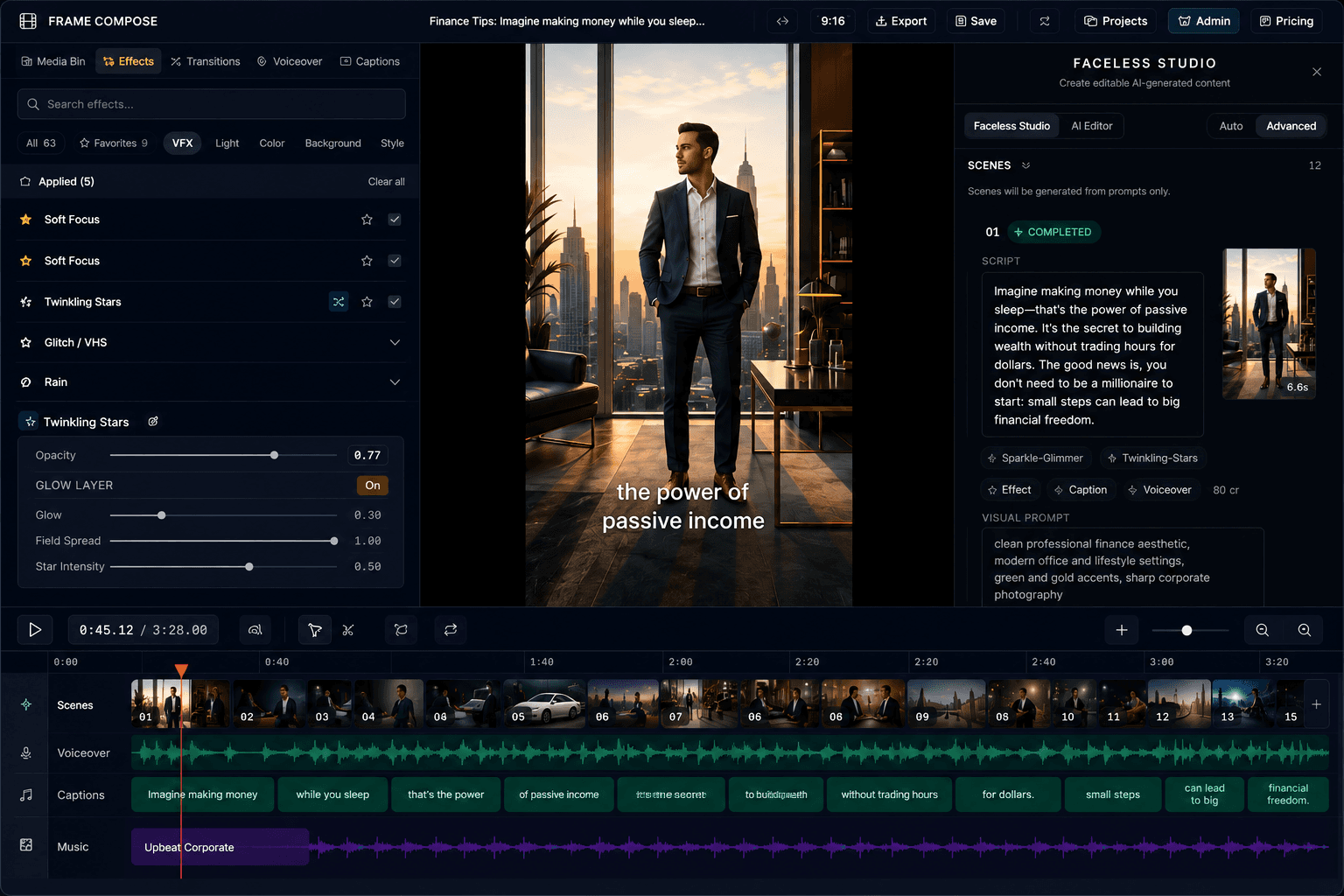
FrameCompose Video Studio turning a two-person message script into narrated scenes and captions
Each message becomes a readable scene while narration, captions, music, and timing stay editable.

Choose two fictional speakers and one clear source of tension.

Write the final reveal before filling in the earlier messages.

Preview every bubble for clarity and realistic reading speed.

Keep narration, captions, music, and scene timing editable.

1. Decide what the final message changes

Write the last important message first. It should reveal evidence, expose a false assumption, or force one speaker to make a decision. A final bubble that merely repeats the premise will feel like the story stopped rather than ended.

Then write one sentence describing what the viewer believes before the reveal and what they understand afterwards. That contrast is the spine of the conversation.

2. Give each speaker a distinct job and voice

Keep the conversation between exactly two people so the viewer can immediately understand which side owns each bubble. One speaker usually wants an answer while the other delays, denies, redirects, or reveals information.

Use different vocabulary and message lengths for each person. Names, emojis, and slang can help, but the story should still be understandable without relying on colour alone.

3. Build the reveal one message at a time

A practical six-beat structure is: normal opening, suspicious detail, denial, specific evidence, reversal, and final consequence. Delete greetings or reactions that do not change the situation.

Keep most messages to one or two short lines. Long explanations slow the visual rhythm and make the viewer read ahead instead of waiting for the next bubble.

4. Preview the thread before generating the video

Paste the conversation into the free text story maker as “Name: message” lines. Check that the correct speaker appears on each side, the names remain consistent, and the reveal still works when the messages are seen one at a time.

Read the thread aloud. If a sentence sounds unnatural or requires rereading, simplify it before creating narration and scenes.

5. Edit narration, captions, and reading time together

Let short reactions move quickly, but hold evidence and the final reveal long enough to read comfortably on a phone. Narration should support the message instead of speaking far ahead of the visible bubble.

Preview the complete video once with sound and once muted. Correct names, timing, captions, and music, then confirm that the scenario is clearly fictional or authorised before publishing.

Frequently asked questions

A few quick answers before you jump in.

How many messages should a text-message story video have?

Use the fewest messages needed to establish the situation and deliver the reversal. Six to twelve concise bubbles is a useful starting range, but clarity matters more than a fixed count.

Should every message be narrated?

Not necessarily. Narration can improve accessibility and pacing, but a readable silent version can work when the message timing, captions, music, and sound design carry the scene.

Can I make an iMessage-style story for free?

Yes. The FrameCompose text story maker previews a two-person iMessage-style thread in the browser without an account. The conversation can then be handed into the editable video workflow.

Can I use a real private conversation?

Only when you have the right and permission to publish it. For entertainment examples, use fictional names and details and never make invented messages look like evidence against a real person.

Related pages

Explore the rest of the workflow, from first idea to final export.