Evidence-led comparison

FrameCompose vs Higgsfield: cinematic generation or editable production timeline?

Higgsfield offers cinematic generation, camera controls, identity tools, ad automation, preset-driven shorts, and a node-based Canvas. FrameCompose focuses on turning a generated video into editable scenes, captions, voiceover, effects, transitions, music, and uploads on one browser timeline.

Maintained by the FrameCompose product team · Last reviewed 6 August 2026

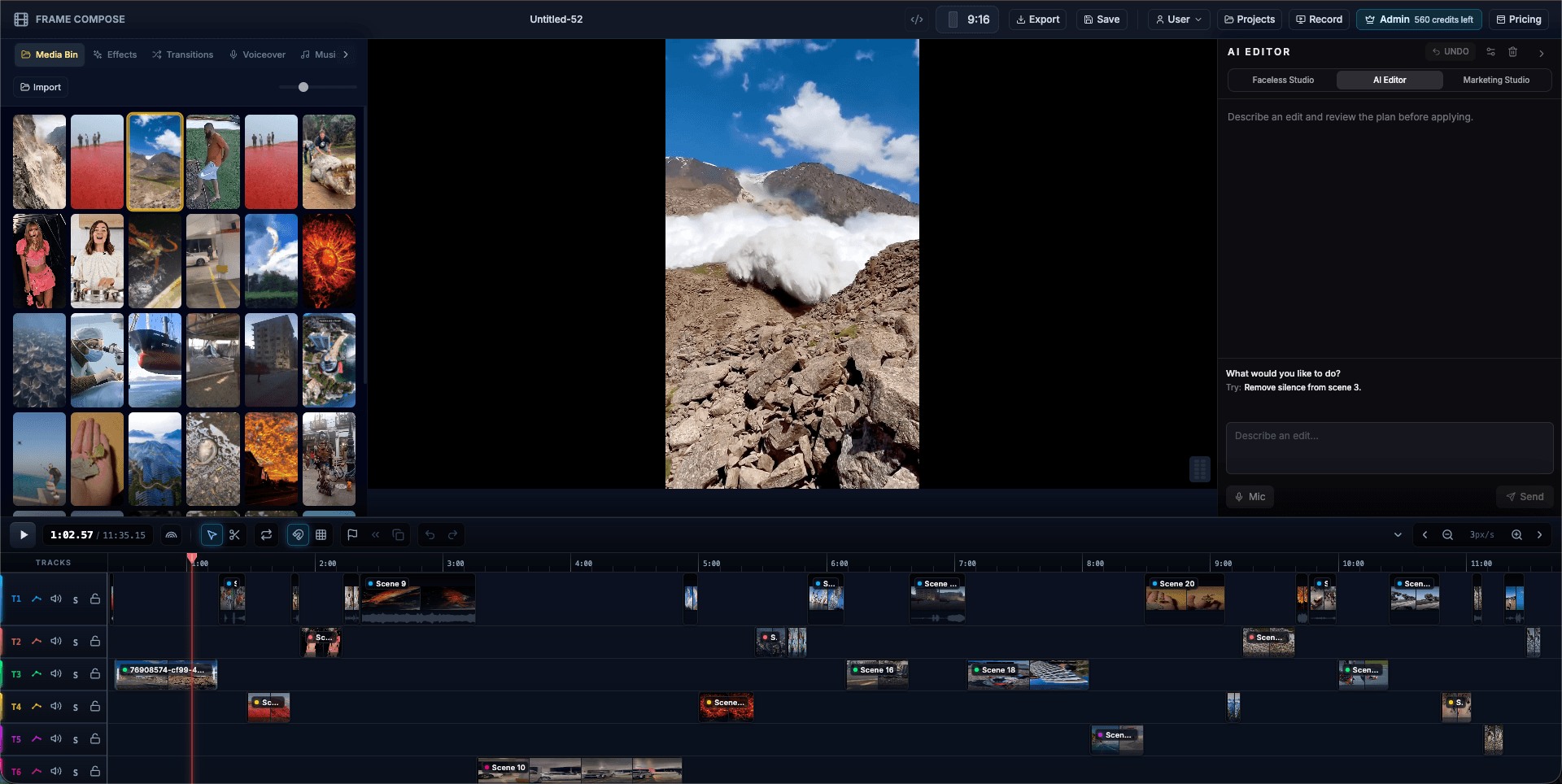
FrameCompose editable AI video timeline with scenes, captions, voiceover, effects, and transitions
Generated shots become editable parts of a complete video rather than a single flattened output.

Higgsfield offers cinematic shot tools, reusable identities, marketing automation, preset shorts, and node workflows.

FrameCompose generates a structured video and keeps its script, scenes, captions, narration, effects, and timing editable.

Higgsfield is especially strong when the creative problem is producing a distinctive shot, character, product visual, or ad variation.

FrameCompose is especially strong when many assets must become one coherent, directly editable social video.

What Higgsfield already does well

Higgsfield has grown into a wide creative suite. Cinema Studio gives filmmakers structured control over shot composition, camera movement, optics, and motion. Canvas connects prompts, references, images, video models, and outputs as reusable nodes in a visual pipeline.

Its specialist products also cover practical production jobs. Marketing Studio can turn a product or app link into ad concepts and finished creative, while Shorts Studio applies preset or learned visual treatments to uploaded footage without requiring timeline editing.

Where FrameCompose is different

FrameCompose is organised around the finished-video timeline. A prompt can create the script, scene plan, generated visuals, narration, captions, effects, transitions, and music, but every accepted part remains available for direct editing afterward.

That matters when the first generation is mostly right. You can preserve the rest of the project while replacing one scene, correcting one caption, swapping one voiceover segment, adding uploaded footage, changing an effect, or retiming a transition. Editing and exporting do not consume generation credits.

Compare the whole production job

Test both products with the job you actually repeat. Create the same 30 to 60 second video, then change the hook, replace a weak middle shot, correct the narration, retime the captions, and insert one uploaded clip without rebuilding the accepted sections.

Choose Higgsfield when camera control, model choice, persistent characters, ad variation, preset transformation, or connected generation pipelines are the centre of the work. Choose FrameCompose when the main requirement is a complete editable video whose media, script, voice, captions, effects, and timing stay together.

Pricing, models, and credits change

Both products regularly add models and production tools. Credit costs can vary by model, duration, resolution, feature, and subscription level, so a static price comparison can become misleading quickly.

Check the current official pricing pages and price the workflow you intend to repeat. Include failed generations, variations, source-asset creation, voiceover, captions, post-generation edits, storage, and exports rather than comparing only the cheapest advertised monthly plan.

Frequently asked questions

A few quick answers before you jump in.

Does Higgsfield have editing tools?

Yes. Higgsfield is a broad creative suite with prompt-based image and video editing, Shorts Studio, Marketing Studio, Cinema Studio, and a node-based Canvas. It should not be described as a generator with no editing or workflow tools.

What is the main difference between FrameCompose and Higgsfield?

Higgsfield emphasises cinematic shot generation, camera control, reusable identities, preset-driven short creation, ad automation, and node-based creative pipelines. FrameCompose emphasises generating a complete video and exposing its scenes, narration, captions, effects, transitions, music, and uploads on one conventional timeline for direct repair.

Which is better for cinematic AI shots?

Higgsfield is a strong choice when camera movement, optics, character identity, model choice, or cinematic shot generation is the main challenge. FrameCompose is a strong choice when those shots must become part of a longer structured video with editable script, captions, voiceover, timing, transitions, and mixed media.

Can I use Higgsfield and FrameCompose together?

Yes. You can generate specialist shots, characters, product visuals, or ad assets in Higgsfield, upload the accepted outputs to FrameCompose, and finish the full narrative with captions, narration, effects, transitions, music, and additional scenes on the timeline.

Related pages

Explore the rest of the workflow, from first idea to final export.