True-crime format

Build tension without losing the facts.

The true-crime template gives the story a hook, chronology, evidence beats, and a controlled visual direction while leaving every line and scene open to review.

Maintained by the FrameCompose product team · Last reviewed 6 August 2026

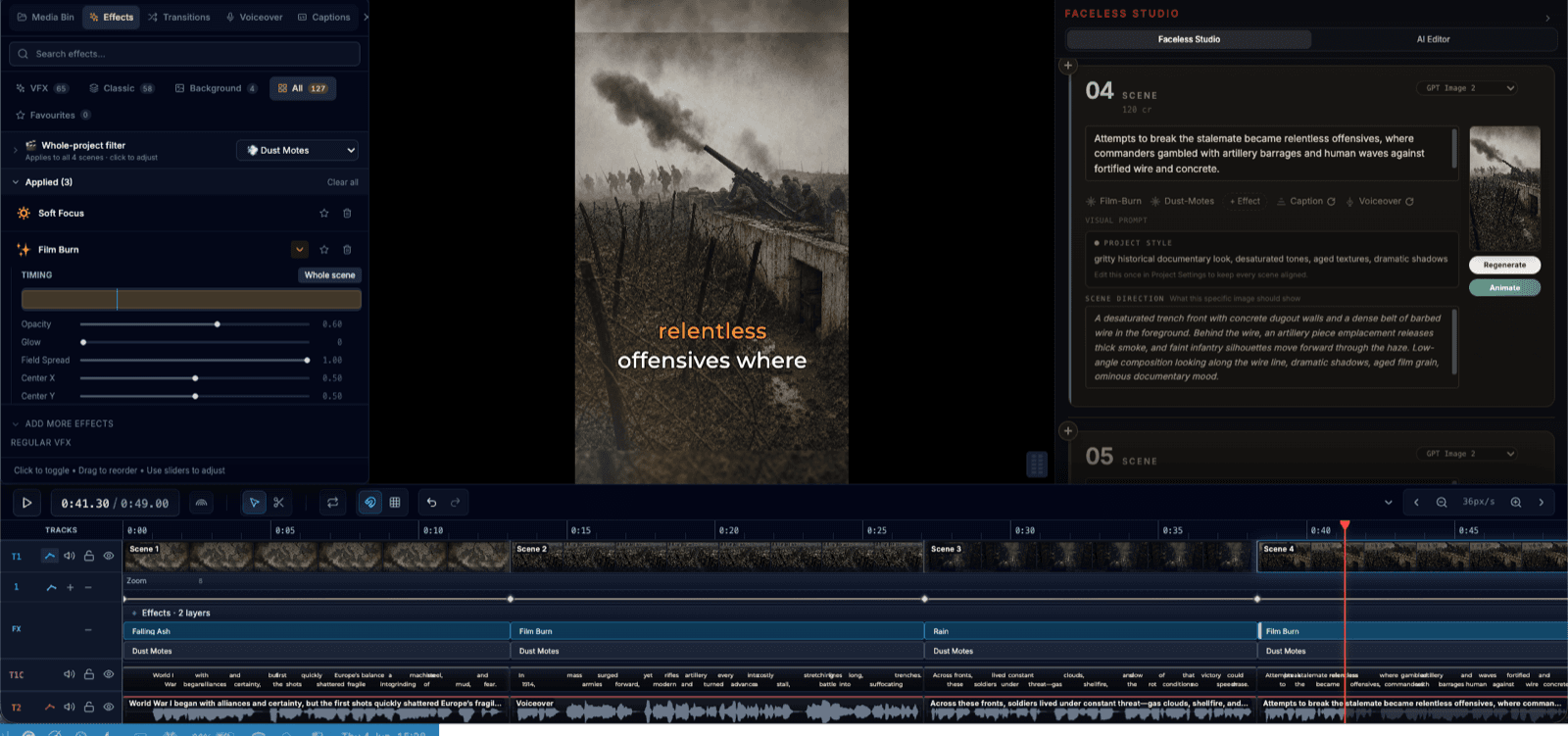
FrameCompose editor effects panel applied to a cinematic scene-based video
Visual atmosphere can be adjusted without flattening the underlying edit.

Hook, timeline, evidence, and reveal structure.

Noir, cold-case, and documentary visual options.

Narration and captions remain editable.

A fictional neo-noir recipe shows the format safely.

Live recipe proof

Neo-Noir Mystery

Rain-slick shadows and prowling dolly moves over a cold-case mystery

Template
True Crime
Style
Cold Case
Camera direction
Neo-noir (Rain-slick shadows, smoke, prowling dolly moves)
Talking mode
Off-screen voiceover (a voice reads the script + captions)
Model
Video clips · Veo 3.1 Lite (cheapest)
Length
~42s (7 scenes)

Exact prompt

A detective reopens the case of a jazz singer who vanished from a locked dressing room in 1987. Every witness from that night kept one secret, and the tape recorder found under the floorboards has thirty seconds nobody can explain.

Start with the unanswered question

A strong hook identifies the central mystery without inventing certainty. State what is known, what is disputed, and why the case remains compelling.

Do not bury the identity of the case behind generic suspense language. The viewer should understand the subject quickly.

Separate evidence from atmosphere

Cinematic visuals can establish mood, but they are not evidence. Keep dates, locations, quotations, allegations, and outcomes tied to reliable sources. Use labels when an image is illustrative or generated.

The editable script and caption layers make factual corrections possible before publication.

Use chronology to prevent confusion

Organise the story around a clear sequence: context, incident, investigation, contradiction, outcome, and remaining questions. Repeat names and dates only when necessary for orientation.

Scene-level editing lets you shorten a weak tangent without disturbing the accepted sections.

Protect victims and avoid harmful claims

Do not sensationalise graphic harm, identify private individuals unnecessarily, or present an allegation as a conviction. Check local law, platform policy, source rights, and the interests of victims and families before publishing.

Frequently asked questions

A few quick answers before you jump in.

Can I use this template for fictional mysteries?

Yes. Fiction is often the safest way to practise the structure, visual pacing, and narration style.

Does the template verify facts automatically?

No. The creator remains responsible for source quality, wording, legal risk, and factual accuracy.

Can I change the visual style?

Yes. Choose a relevant style and adjust or replace individual scenes after generation.

Can I make a vertical true-crime Short?

Yes. Keep names, dates, and evidence readable in the chosen aspect ratio and avoid overcrowding the screen.

Related pages

Explore the rest of the workflow, from first idea to final export.