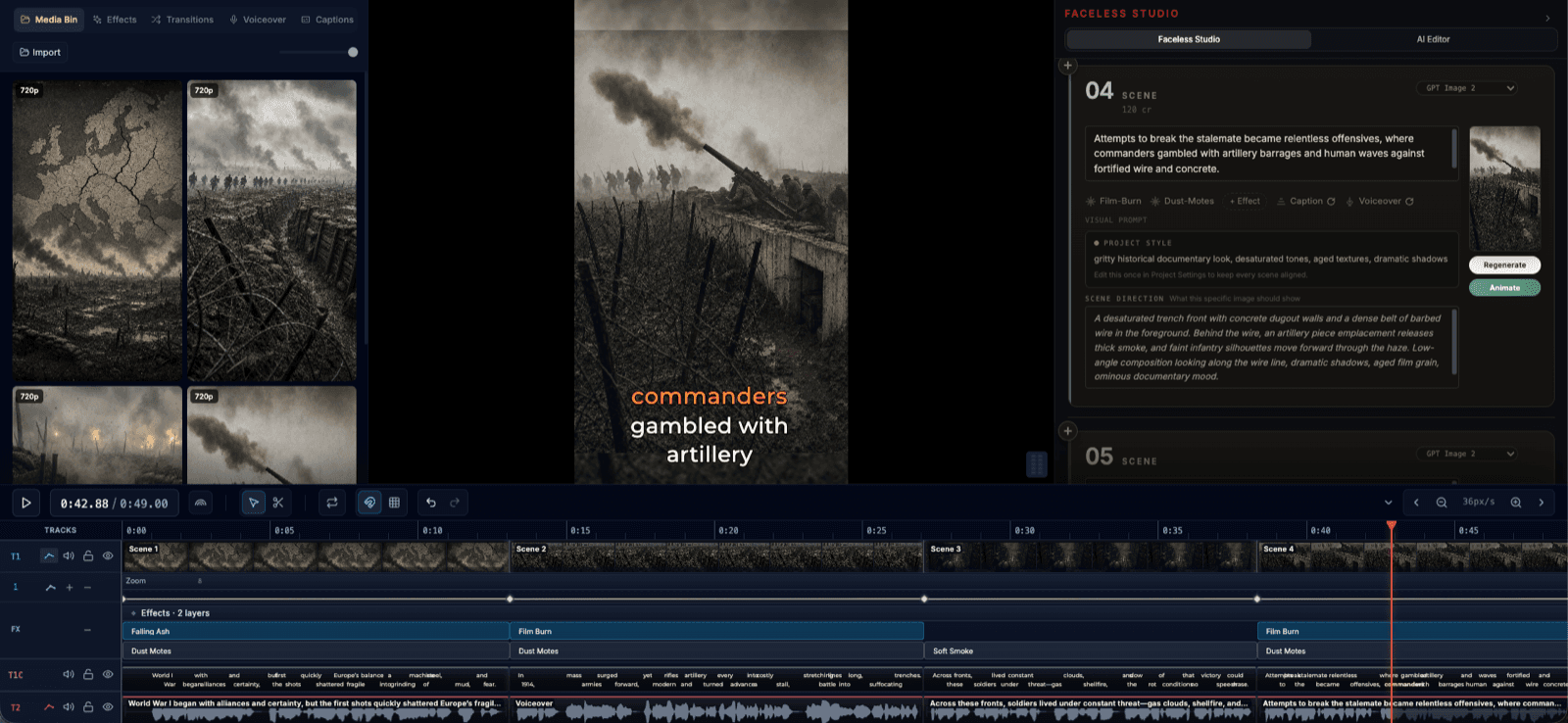
Earn the next three seconds without hiding the topic.
A short-video hook should tell the right viewer why this specific video matters now. Lead with a concrete problem, result, contrast, or unanswered question, then move directly into evidence rather than stretching the curiosity gap.
Maintained by the FrameCompose product team · Last reviewed 21 September 2026
The opening line, first caption, visual, and following scene should tell one story.
Write the payoff before trying to make the opening clever.
Name a concrete problem, result, contrast, or question immediately.
Keep the first line natural enough to say in one breath.
Test the hook with its opening visual and the sentence that follows.
1. Decide what the viewer earns by staying
Finish the sentence “By the end, the viewer will know, see, or feel…” before writing the opener. A precise payoff produces a precise hook; a vague payoff usually produces generic urgency.
The hook can delay part of the answer, but it should not conceal the subject. The right viewer needs enough information to recognise that the video is for them.
2. Choose the tension that already exists
Useful hooks often expose a mistake, contrast two outcomes, promise a demonstration, challenge an assumption, show a surprising result, or open a specific question. Choose the structure that honestly fits the material.
Do not add a shocking claim that the video cannot prove. Short-term curiosity is not useful when the payoff disappoints or damages trust.
3. Make the first line speakable and concrete
Use active language, familiar words, and one main idea. Replace “Here are some things you should know” with the exact mistake, result, number, or situation the video addresses.
Read the line at normal speed. If it needs several breaths or the important word arrives at the end, shorten it or move the key detail forward.
Hook rewrite: an editing tutorial
A writing example, not a claim of measured retention improvement. The demonstration must actually show the promised repair.
Vague: Here are some tips for editing AI videos.
Specific: One wrong scene does not mean starting your video again.
Next line: Keep the narration and replace the image that does not match.
First visual: Show the mismatched scene and its replacement on the same timeline.
Hook rewrite: a product demonstration
An illustrative software-demo brief. Use your own product recording and only describe a result the footage proves.
Vague: Take a look at our useful dashboard.
Specific: Find the overdue item before adding another chart.
Next line: Start with the task that needs a decision, not a tour of every menu.
First visual: A readable example task and the action that resolves it.
Hook rewrite: a fictional text story
Keep the story explicitly fictional. Do not present invented messages as evidence against a real person.
Vague: You will never believe this conversation.
Specific: The message blamed my login. The device name told another story.
Next line: Check the computer name before you decide who deleted the files.
First visual: The first chat bubble, followed by enough reading time for the device-name reveal.
The first image or action should prove, clarify, or intensify the opening line. Showing the result, mistake, product state, or unusual detail usually works better than a generic establishing shot.
Keep the first caption legible and consistent with what is spoken. Three competing claims in voice, text, and image create confusion instead of attention.
5. Test the transition into the video
Read the hook followed by the next two sentences. The video should begin answering the question immediately rather than repeating the promise in different words.
Generate several honest approaches, then judge them against the same topic and payoff. Retention data can reveal where an opening loses viewers, but no score or template can guarantee performance.
Frequently asked questions
A few quick answers before you jump in.
How long should a short-video hook be?
Keep it short enough to understand in one natural breath. The exact word count matters less than making the topic and tension clear before the viewer loses context or interest.
Should every hook ask a question?
No. A concrete result, contrast, mistake, demonstration, or surprising fact can create a strong opening without using a question.
What makes a hook feel like clickbait?
A hook becomes misleading when it exaggerates the claim, hides the real topic, or promises a payoff the video does not deliver.
Can an AI hook generator guarantee views?
No. A generator can produce useful angles and craft signals, but performance also depends on the topic, visual, delivery, audience, competition, and the rest of the video.
Related pages
Explore the rest of the workflow, from first idea to final export.